Menu
About
Digital product guy.
Problem solver.
Tech nerd.
At the intersection of product, design and engineering, I’ve been building digital products since 2014. I take a lateral approach to problem-solving, guided by a deep commitment to simplicity and craftsmanship.
Visit my blog to read my latest thoughts.
I am…
A trusted digital partner
I love a twisty technical challenge (type 2 fun ftw!) and love partnering with forward-thinking people to deliver high-impact tech.
Open, transparent, honest
I believe that openness, transparency and honesty are essentials to doing good work.
Contacts
Contacts
Let’s collaborate,
or just say hi!
col-1
col-1
col-1
col-1
col-8
01
newbiz@shaunjenkins.com
Please include: the type of project (e.g. redesign, new product) and relevant project details (e.g. budget, timing).
02
help@shaunjenkins.com
Existing client and need urgent help with something? Use this email address.
03
hi@shaunjenkins.com
Just want to say hi? Use this email address.
I typically reply within an hour or so.
Case studies
ONFORM
Case study
ONFORM
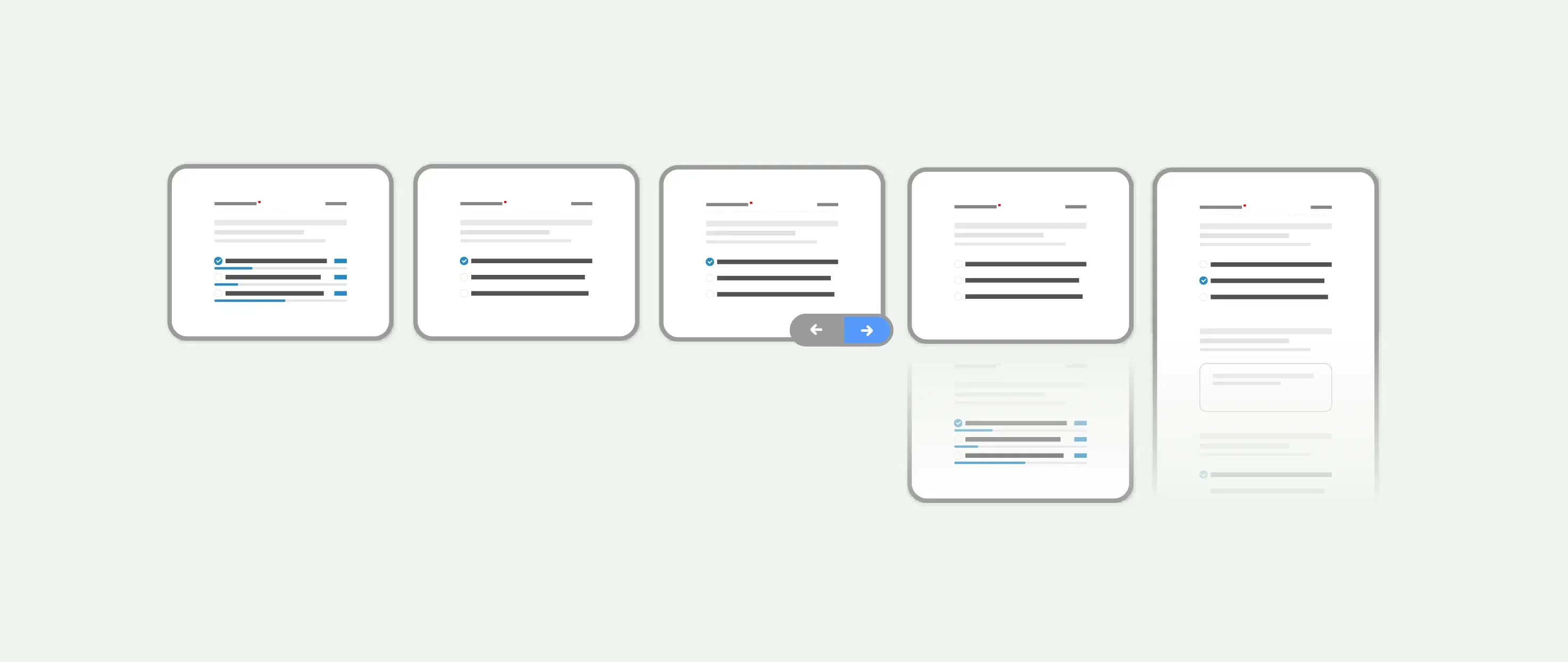
Building a powerfully simple engagement platform.
Visit onform.net
Online engagement has become complicated. Do you want to run a Voice of The Customer (VoC) campaign? Or perhaps you’re looking to dive in to Experience Management (XM) or assess your Net Promoter Score (NPS)? Maybe you’re looking for customer insights, or to conduct market research or improve customer experience (CX)?
The never-ending array of mumbo jumbo and buzz words is muddying the water and complicating an exercise that should be all about gaining clarity.
ONFORM does things differently. ONFORM elegantly combines all of the important elements of online engagement in to one easy to use solution which covers all of your engagement needs.
Football Association of Wales
Case study
Football Association of Wales
Building a digital ecosystem for Welsh football.

Visit faw.cymru
In September 2022, during my time with the brilliant team at Hopp Studio, we were awarded a contract to transform the digital presence of the Football Association of Wales (FAW). This success was the culmination of months of hard work on the tender alongside the MD, account manager and designer, where I mapped out the technical approach, budgets and indicative timings.
Stepping in as the project’s tech lead, I wore multiple hats, taking on Product Management and UX responsibilities to instil a user-centric culture. By implementing scalable solutions like a rem-based grid system and an API-driven architecture, we successfully transformed an expansive digital landscape into an elegant, unified platform against our deadline for the 2022 World Cup.
Blog
Index
Blog
Index
01
My philosophy for building things
28 August, 2025
02
The novelty fallacy: An argument for mastery
10 July, 2025
03
Guide thoughtfully
10 May, 2025
04
Timeless WordPress: Why its core design still shines
12 April, 2025
Latest article
28 August, 2025
My philosophy for building things
Written by Shaun Jenkins
Building good software is hard. Over the years, I’ve collected a set of principles and reminders that help guide my work. They’re not hard and fast rules, just notes I keep for myself to try and build better things and stay sane while doing it. Maybe some of them will be useful to you too.
1. Design & User Experience
- Guide users; don’t disorientate them. Make it obvious where the user is and what comes next. A good interface creates an intuitive and logical path for the user to follow.
- Solve for the user. Don’t confuse technical elegance with user value. Debates about the ‘correct’ architecture or tool are secondary. A user never sees your code; they only feel the result. Measure your work by how well it solves their problem.
- Performance > Superfluous stuff. Every time. People want to get things done quickly, not sit around waiting for an irrelevant animation to finish.
- Accessibility matters. Designing for accessibility often has benefits for everyone (e.g., big buttons, clear contrast, generous spacing).
- Creative solutions > Overtly technical ones. The best solution is often the one that feels simplest to the user, not the one that uses the most complex technology.
2. Code & Craft
- Stand on your own shoulders. Reuse your own proven code and components. It saves time and lets you build on a solid foundation that you understand inside and out.
- Write reusable code. Always be thinking, “I might need this for something else later.” Name things clearly, spin logic out into functions and methods, and use classes well.
- Aim for general but specific. Build things that are specific enough to be useful now, but general enough that they can be adapted for another purpose later without a complete rewrite.
- Build for adaptability. Avoid making architectural choices that are so rigid you can’t adapt or change direction later without a massive, painful effort.
3. Mindset & Philosophy
- Be bold. A bold vision provides a clear goal you’re working towards. This builds morale and momentum, making your team ready and willing to take on the curveballs that will inevitably come your way. It’s what makes you happy to work a little extra, because you’re passionate about what you’re creating.
- Don’t box yourself in. It’s easy to convince yourself there are only one or two ways to solve a problem (X or Y). In reality, there are often many more options (A, B, C, D…). Be careful not to mentally build the walls of a box that you then can’t escape.
- Think long-term. Aim to build things that are designed to stand the test of time, not just solve today’s immediate problem.
- Never compromise on quality. Negotiate on features, timelines and scope – but the quality of what you actually deliver should be non-negotiable.
- Steal like an artist[1]. Understand, learn from, and be inspired by the good ideas of others, then combine and remix them into your own work.
4. Awareness & Execution
- Tackle problem-solving disorientation. When solving a tough problem, it’s incredibly easy to get lost. Take notes. Be methodical. If things aren’t making sense, it might be because there’s more than one issue happening at once.
- Open your eyes. You can’t fix what you can’t see. Use your debugging tools religiously: error logs, var_dump, print_r, console.log.
- Know how problems present. Be vigilant. A critical issue rarely announces itself clearly. It usually looks like something else: “not enough time to do the work”, “important design considerations yet to be figured out”, or “a lack of clarity around who’s doing what”. These are often symptoms of a deeper problem.
- Control what you can control. Focus your energy on the parts of the project and process that you have influence over.
- Build, get feedback, iterate, improve, repeat. That’s how good things get made.
Just some principles I try to follow. It’s all an ongoing process.
[1] From the book Steal Like an Artist: 10 Things Nobody Told You About Being Creative by Austin Kleon.
ver: 1.0.2
build: 0003
bugs[at]shaunjenkins.com